Understand both the value and limits of methods
Evidence-led explanations of common misconceptions, quality control and reproducible practice for research decisions.
 Method schematic
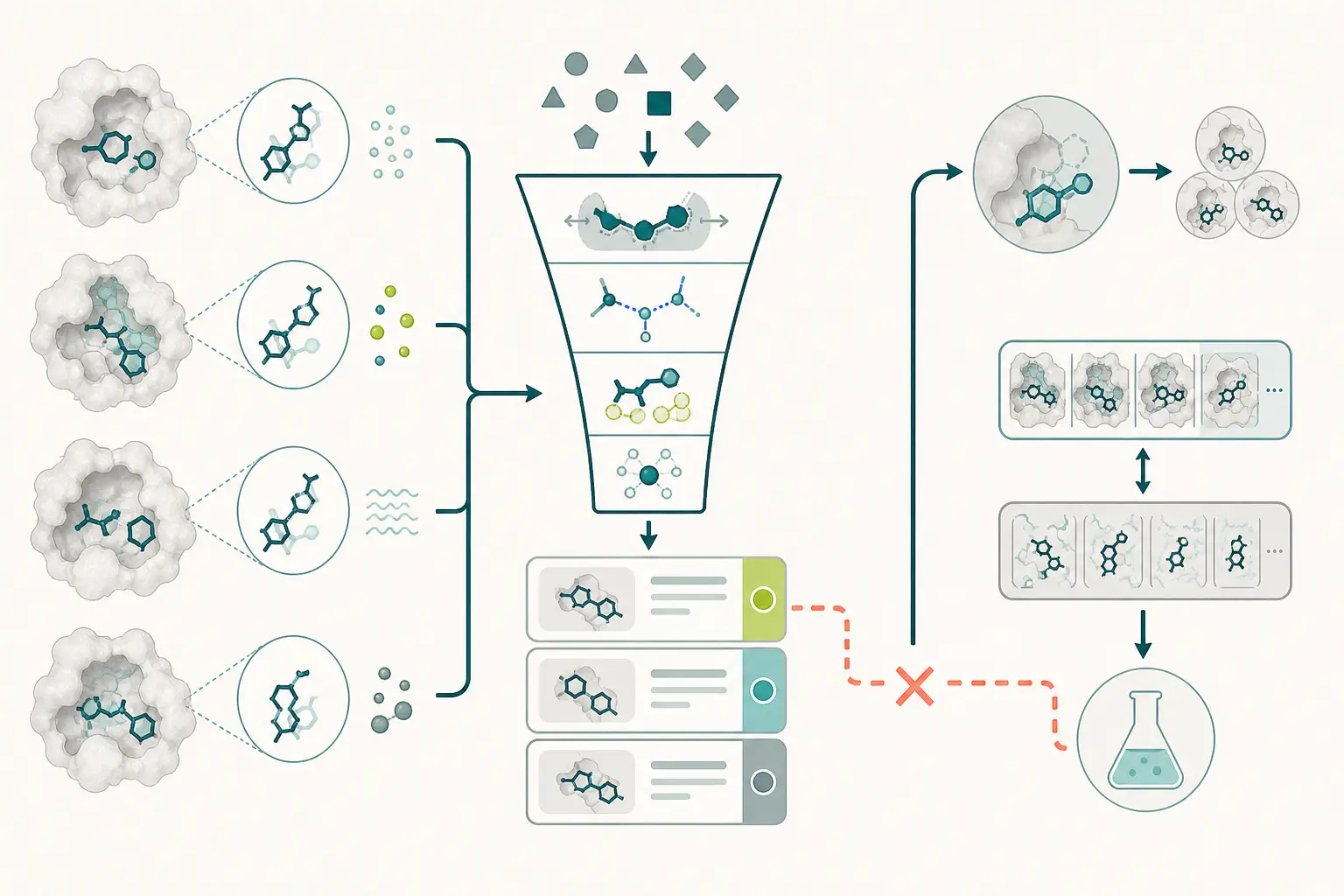
Why a docking score is not binding affinity
A docking score is an approximate objective evaluated for a candidate pose under a particular receptor structure, ligand state, search space, and scoring function. A program may report the value in kcal/mol or call it a “predicted affinity,” but the label does not turn it into an experimental binding free energy.
10 min read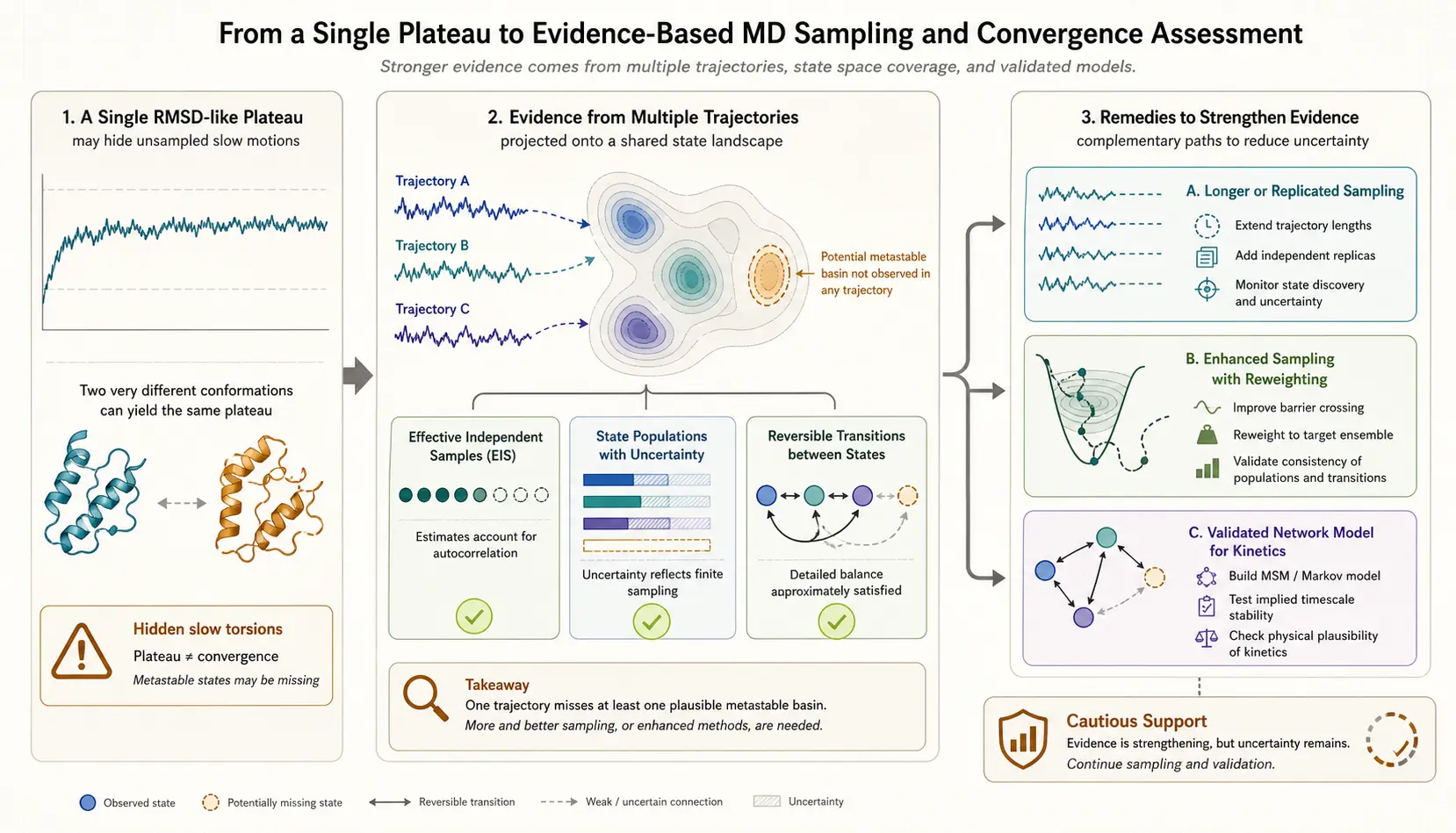 Method schematic
Beyond the RMSD Plot: Assessing Sampling and Convergence in Molecular Dynamics
An RMSD plateau is often treated as evidence that a molecular dynamics trajectory has equilibrated. It supports a much narrower statement: for a chosen atom selection, alignment procedure, and reference, structural displacement has entered a bounded range.
10 min read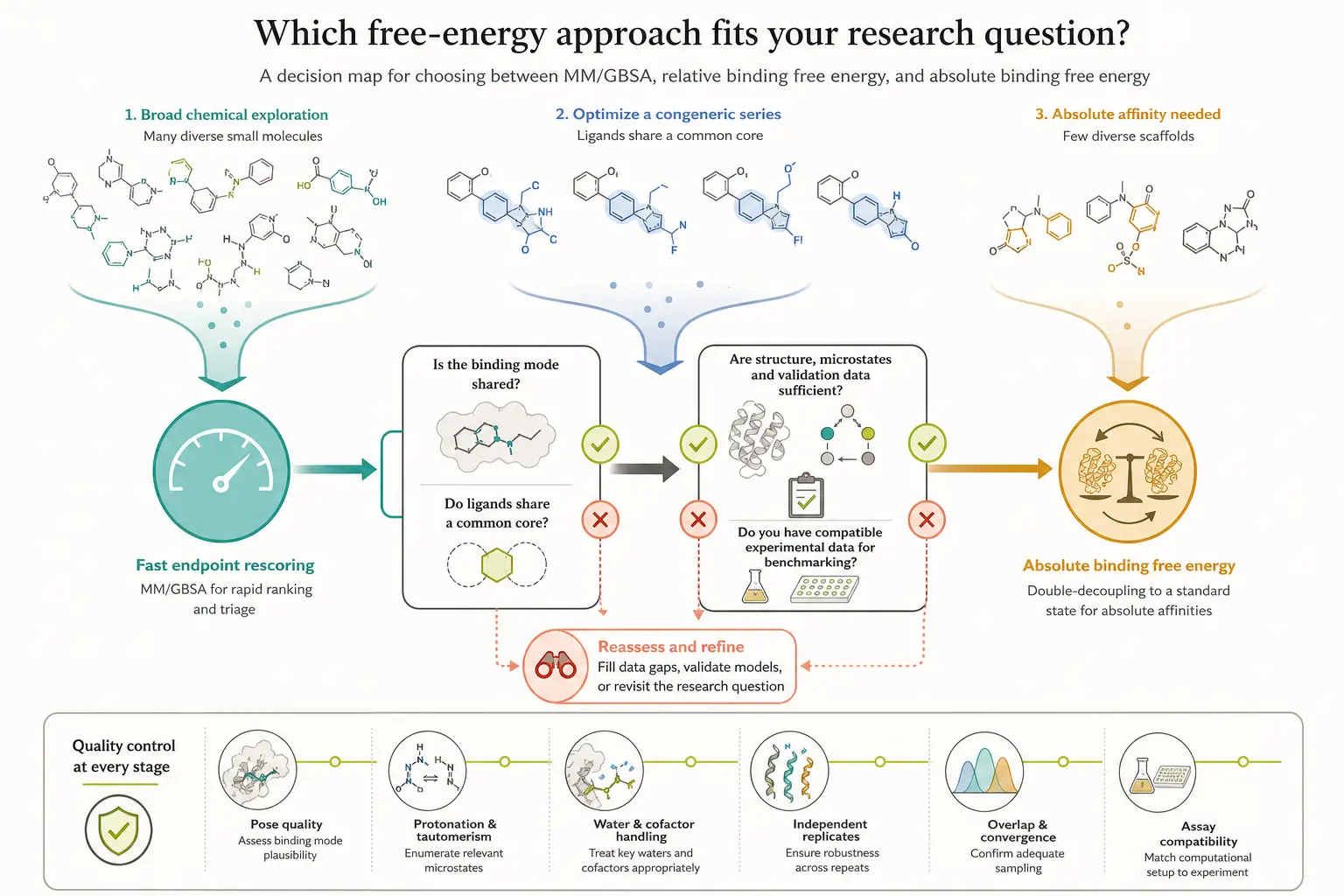 Method schematic
Choosing among MM/GBSA, RBFE and FEP
MM/GBSA, relative binding free energy (RBFE), and what is often called “FEP” are not three rungs on a universal accuracy ladder. They target different questions.
10 min read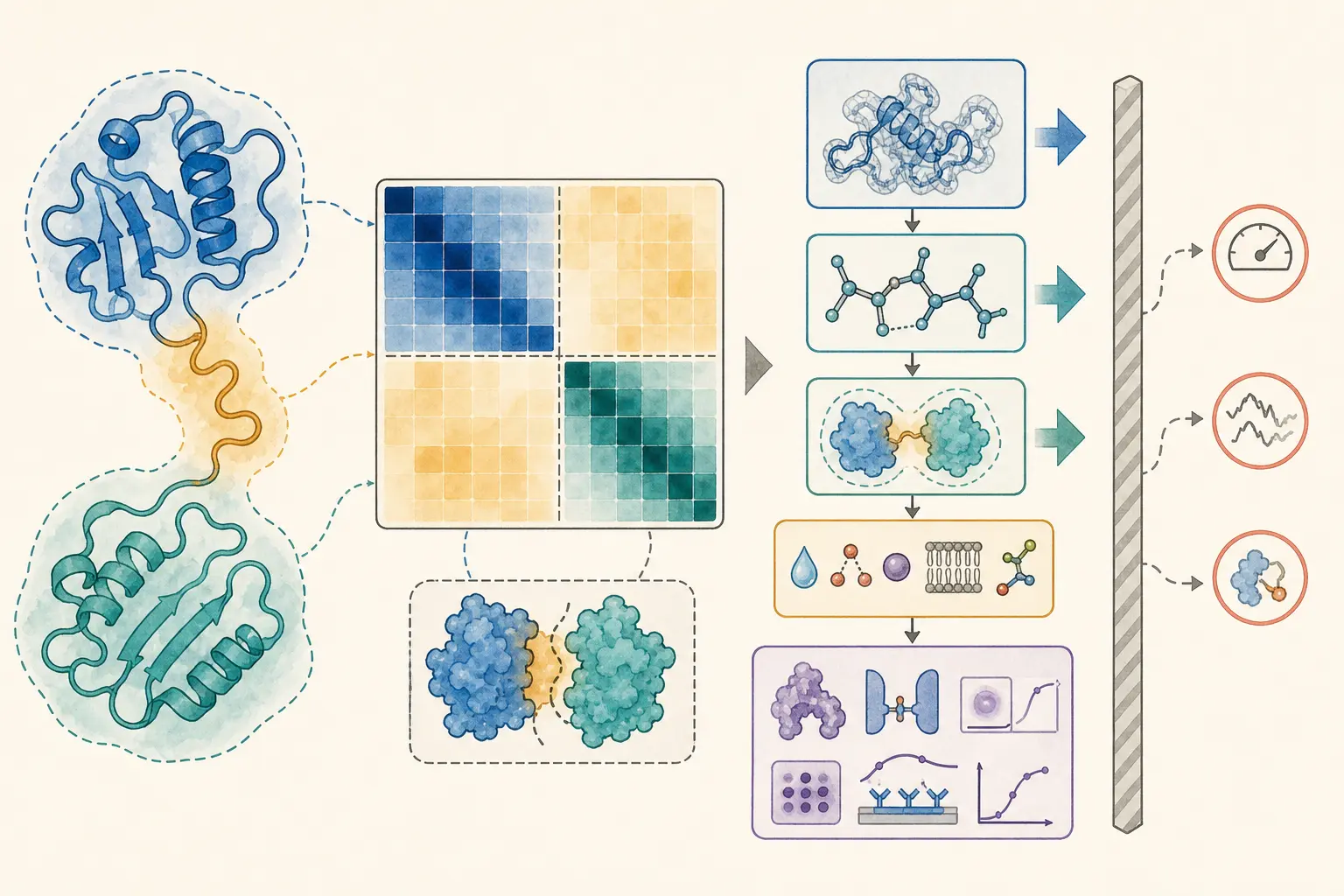 Method schematic
Read confidence and scope before using a predicted structure
AlphaFold2, AlphaFold3, and ESMFold have made structural hypotheses available at unprecedented scale, but a coordinate file is not an experimental observation. pLDDT primarily estimates local structural accuracy, whereas predicted aligned error (PAE) estimates uncertainty in the relative placement of two regions.
10 min read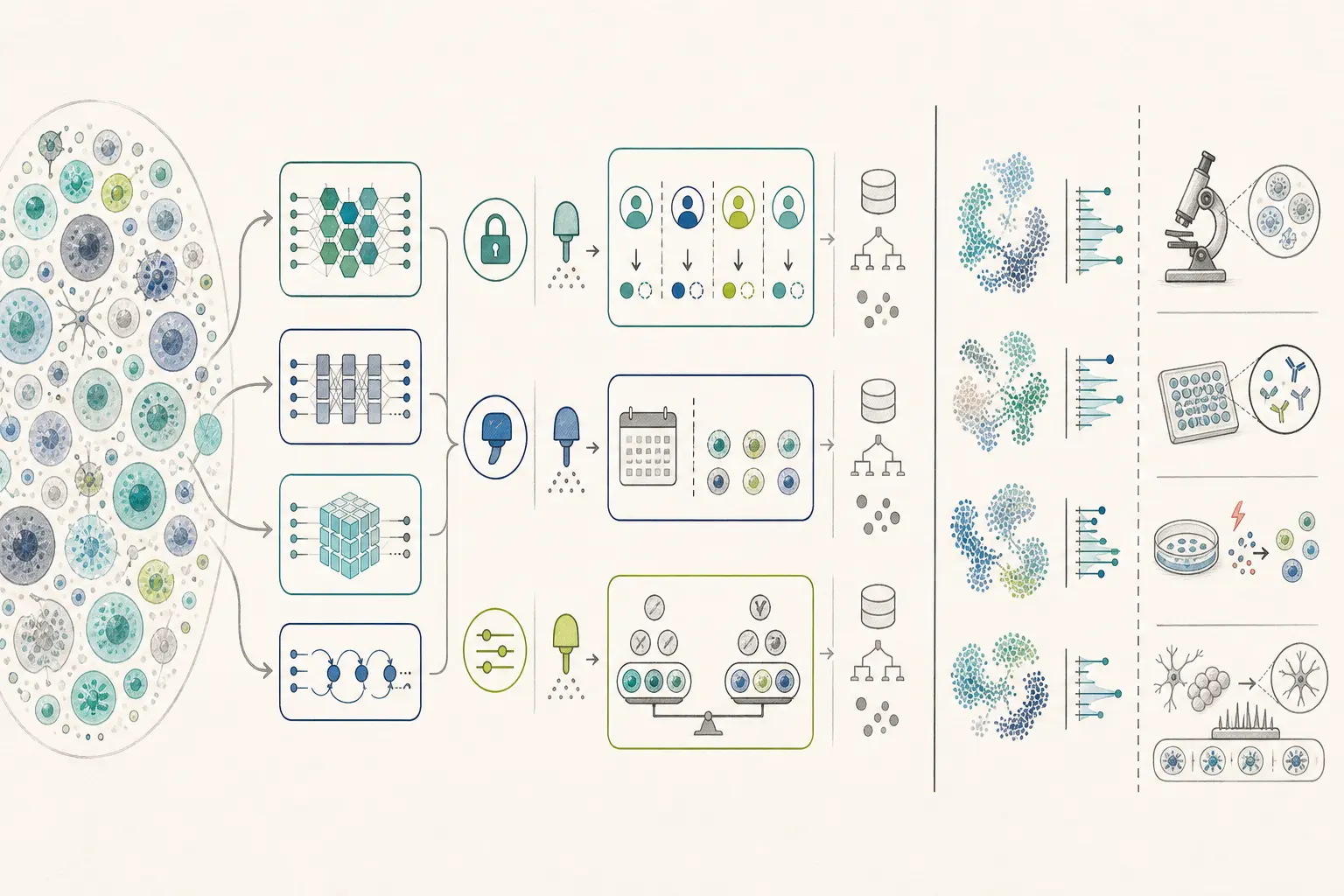 Method schematic
Single-cell foundation models earn their value through task-level baselines
Geneformer, scGPT, scFoundation and UCE were pretrained on approximately 30, 33, 50 and 36 million single cells, respectively, and demonstrate credible opportunities for transfer learning, cell and gene embeddings, atlas mapping and perturbation modelling.[1–4] Pretraining scale, however, is not a downstream endpoint.
10 min read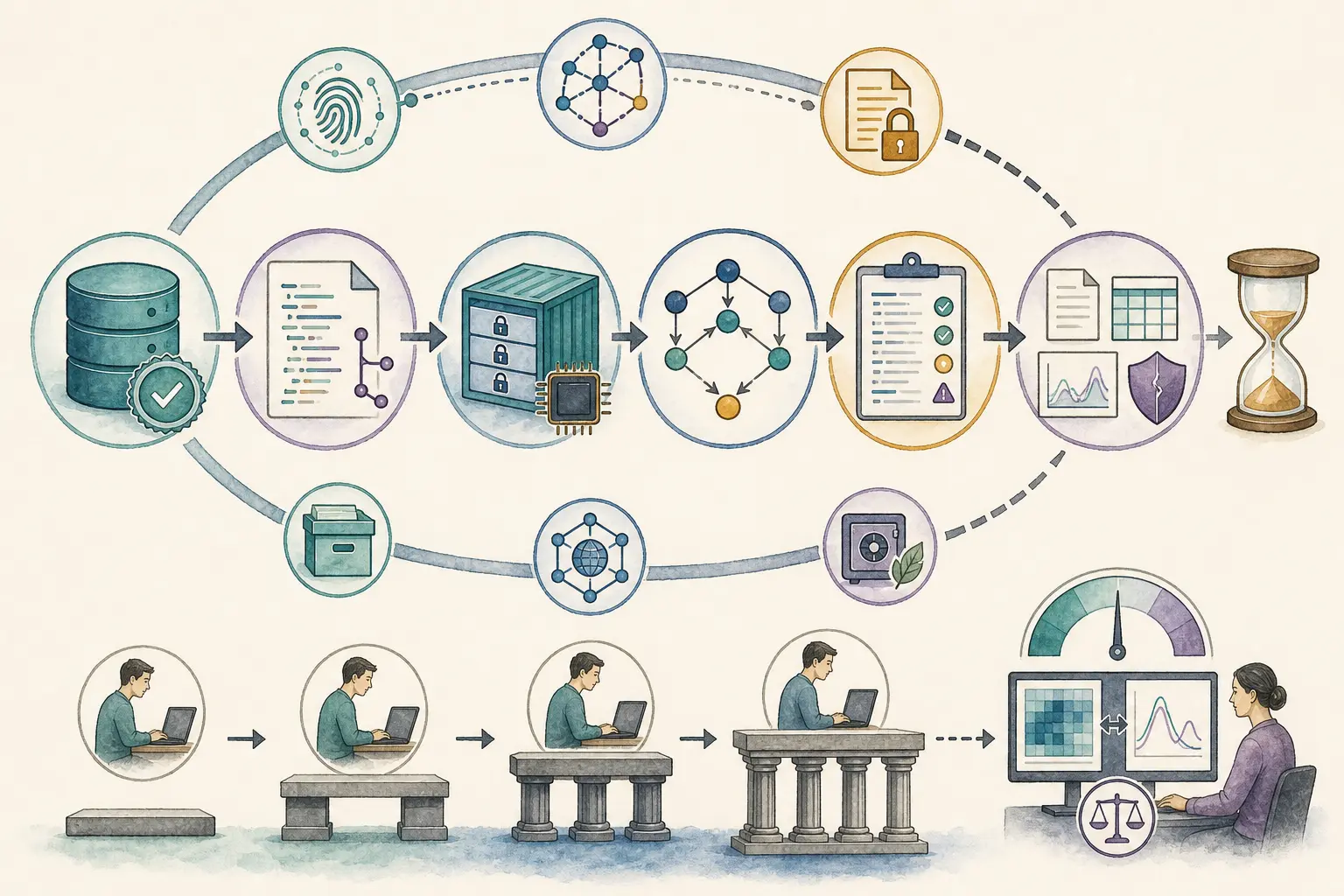 Method schematic
What makes a scientific-computing deliverable reproducible
A reproducible deliverable is not a zip file containing scripts and figures. It is a bounded, testable research object: inputs have identities and checksums; code and software resolve to exact versions; parameters and randomness are recorded; the environment can be reconstructed or retrieved; a workflow connects steps and dependencies; execution records link one run to its outputs; and raw results, analysis code, and…
10 min read